Last updated November 17, 2026

Free written scope consultation - allowances, timeline, and change-order rules on paper before a single trade is scheduled
Construction Permits, Codes & Inspections in Tustin, CA: What You Need to Know
Most homeowners assume an unpermitted addition is a problem only if someone complains. In Tustin, it usually stays quiet until the day you sell. That patio cover, converted garage, or bonus room you inherited or built without a permit doesn’t vanish: it resurfaces on the title report during escrow, and a buyer’s lender can demand it be legalized or torn out before the loan funds. Retroactive permitting at current code is almost always more expensive and more disruptive than pulling the permit the first time. This guide maps out how permitting actually works in Tustin, where the fire authority and design review add layers, and how to keep a project clean from the first inspection to the final sign-off.
Quick Answer
Nearly every structural, electrical, plumbing, or mechanical change in Tustin requires a building permit from the City of Tustin, and many projects also need separate sign-off from the Orange County Fire Authority. Small cosmetic work like repainting, flooring, and like-for-like fixture swaps is typically exempt. Projects inside Tustin Legacy face an extra design review layer that standard city permits don’t require. A written permit plan and inspection schedule set before demolition is what keeps a job on track.
Styles & brands we work with
- Kitchen remodeling
- Bathroom remodeling
- Home additions & ADU
- Roofing
- Windows & doors
- Driveway & pavers
- Fence
Table of Contents
- Which Projects Need a Permit in Tustin?
- How Tustin Legacy Adds a Design Review Layer
- When the Orange County Fire Authority Signs Off
- Owner-Builder Permits: What They Allow and What They Expose
- How to Track a Permit and Schedule Inspections
- ADU Permits: Prefab, Modular, and Stick-Built Paths
- What Inspectors Actually Check
- How Permits Affect Resale and Title
Which Projects Need a Permit in Tustin?
Tustin does not set a flat dollar value below which construction is exempt. The trigger is the scope and type of work, not the price tag. A $900 water heater replacement still needs a permit because it’s a plumbing and gas appliance; a $40,000 cosmetic kitchen refresh with new cabinet fronts and paint may not. The practical rule: if you’re cutting into the structure, moving utilities, changing the footprint, or adding conditioned space, expect a permit. If you’re finishing a surface, you usually don’t.
Here’s how the split generally falls in Tustin:
- Always permit: room additions, ADUs, garage conversions, new or relocated walls, roofing replacements (structural decking and sheathing changes), window and door replacements where the opening size changes, electrical panel upgrades, gas line reroutes, and any new plumbing fixture location.
- Usually permit: kitchen and bathroom remodels that move plumbing or electrical, patio covers attached to the house, block walls over a low height threshold, and driveway or hardscape changes that alter drainage or right-of-way.
- Typically exempt: repainting, interior flooring, cabinet refacing without layout changes, like-for-like fixture swaps in the same location, and landscaping that doesn’t touch grading or drainage.
If you’re unsure, call the City of Tustin’s building department before you buy materials. A five-minute conversation saves a stop-work order. For exterior work like driveway & pavers, drainage and right-of-way rules can also pull in the city engineering side, which is a separate review from the building permit itself.
How Tustin Legacy Adds a Design Review Layer
Tustin Legacy is the large redevelopment area on the former Marine Corps Air Station property, and it operates under its own specific plan with design guidelines layered on top of standard city code. If your project sits inside that boundary, the city building permit alone isn’t the finish line. You’ll also go through a design review that looks at massing, materials, colors, roof pitch, and how the addition reads from the street. This review is about neighborhood character, not just structural safety.
The timeline impact is real. A design review cycle can add weeks before the building permit is even issued, because the plans have to clear that committee before they go to the plan checker. Projects that skip this step and pull a standard permit can get flagged mid-construction and forced to resubmit.
- Confirm your parcel is inside the Tustin Legacy Specific Plan boundary.
- Submit conceptual plans to design review before finalizing construction drawings.
- Incorporate any design comments into the permit set.
- Pull the building permit with the approved design attached.
We work through this regularly on additions and home additions & ADU projects. If the design review layer isn’t mapped at the start, it becomes the longest wait in the schedule.
When the Orange County Fire Authority Signs Off
The Orange County Fire Authority (OCFA) provides fire protection for Tustin, which means fire-related code reviews happen at the county level, not inside the city building department. OCFA reviews projects involving fire-rated walls, fire sprinkler systems, address and access requirements, and anything near a wildland interface on the eastern edge of the city near the hills. Some projects need OCFA sign-off before the city will issue the permit, and some need an OCFA inspection after construction.
Where OCFA shows up most in Tustin residential work:
- New ADUs and additions that alter required fire flows or access for fire apparatus.
- Sprinkler system additions or modifications when an ADU is added to a property.
- Fire-rated construction where a new wall comes close to a property line.
- Projects in higher-fire-severity zones near the foothill areas.
The mistake we see is treating OCFA as a formality that runs on the city’s schedule. It doesn’t. The fire review is its own queue, and if your plans need revisions, it restarts. Building the OCFA step into the project calendar from day one is the difference between a smooth inspection sequence and a three-week hold.
Owner-Builder Permits: What They Allow and What They Expose
An owner-builder permit lets a homeowner pull a permit in their own name and act as their own general contractor. It’s legal in California for a home you live in, and it can save money on paper. But the exposure is real and worth understanding before you sign the application. When you pull as owner-builder, you take on the supervision, the scheduling of every trade, the inspection coordination, and the liability that would normally sit with a licensed contractor.
- Warranty gaps: Manufacturer warranties on some materials, particularly roofing systems and window assemblies, can be voided when they aren’t installed by a licensed installer credentialed with the manufacturer.
- Insurance gaps: A homeowner’s policy may not cover construction defects on owner-built work the way it would with a licensed general contractor carrying liability coverage.
- Resale disclosure: Owner-builder work must be disclosed in a sale, and buyers’ agents flag it.
- No subcontractor protection: If a sub you hired walks off or produces defective work, there’s no general contractor to hold accountable.
Owner-builder makes sense for a confident homeowner managing a small, straightforward job. It makes little sense on an ADU, a structural addition, or a full exterior envelope where the coordination and warranty exposure outweigh the savings. We’ve seen plenty of owners call us after an owner-builder project stalled at the framing inspection.
How to Track a Permit and Schedule Inspections
Tustin runs its permit tracking through an online portal, and it’s worth learning it early. You can look up permit status, see which inspections have passed, upload revised plans, and request the next inspection window from the dashboard. The portal is also where you’ll find the inspection codes the inspector needs when they arrive; if the wrong inspection type is requested, the inspector shows up for the wrong check.
- Log into the city’s permit portal and locate your permit number.
- Check the “inspections” tab to see required inspection milestones for your permit type.
- Request the inspection you’re ready for (framing, rough electrical, rough plumbing, sheathing, final, etc.).
- Confirm the window: Tustin’s inspection scheduling in 2024 and 2025 has generally run a few business days out for standard residential inspections, longer during peak construction months.
- Have plans on site and the permitted work exposed and accessible when the inspector arrives.
Two habits keep inspections moving: request the next inspection the same day the current one passes, and never cover work before it’s been signed off. Drywall over uninspected electrical is the single most common reason a final inspection fails and a project stalls. For straightforward exterior jobs like fence installation, confirm whether the fence height and location trigger a permit or a survey before you order materials.
ADU Permits: Prefab, Modular, and Stick-Built Paths
Accessory dwelling units are one of the biggest categories of Tustin permit activity, and the permit path depends entirely on how the unit is built. A stick-built ADU goes through a full plan check with architectural drawings. A prefab or modular unit goes through a streamlined review where the state-approved factory plans are certified and the city checks the site work, foundation, utility connections, and fire access. Both routes end with the same inspections and a certificate of occupancy before anyone moves in.
We work across all three approaches, and each one carries its own permitting tradeoffs:
- Prefab: Units from brands like Abodu and Cover come with factory-certified plans that can speed plan check, but site prep, foundation, and utility trenching still need permits and inspections.
- Modular: Dvele and similar builders deliver modules that meet state code in the factory; the city inspects the foundation, tie-downs, and hookups.
- Stick-built: Full architectural plan check from scratch, longest timeline, most design flexibility.
The permit mistake we see most on ADUs is forgetting the fire and utility side. An ADU needs its own address, its own utility connections, and often sprinkler modifications under OCFA review. The building permit is one piece; the site work is another.
What Inspectors Actually Check
Tustin inspectors are looking at the same things inspectors check everywhere: that the work matches the approved plans and meets California Building Code as adopted by the city. But knowing the sequence takes the surprise out of it. Most residential projects follow the same inspection arc.
- Foundation: Rebar, formwork, and anchor bolt placement before the pour.
- Framing: Structural members, sheathing, nailing, and hold-downs before insulation or drywall.
- Rough electrical, plumbing, and mechanical: All systems in the walls, exposed and pressure-tested before cover.
- Insulation and drywall: After rough trades pass; sometimes a drywall nailing inspection.
- Final: Everything complete, all systems functioning, and any prior correction notices cleared.
The inspectors care most about one thing: that what they see matches the approved drawings. Changed a window location mid-build? That’s a plan revision, not a field decision. Corrections are routine and not a crisis; they’re the system working. Build time for one round of corrections into the schedule and the project stays calm. Southern California’s dry, warm climate means exterior work like roofing and stucco can run almost year-round here, but inspections still depend on the city’s schedule, not the weather.
How Permits Affect Resale and Title
This is where the permit question stops being about code and starts being about money. An unpermitted structure shows up in the title report, and once a buyer’s agent sees it, the deal changes. Lenders can refuse to fund a loan on a home with unpermitted additions. Buyers can demand a credit or a price reduction. And you, the seller, may be forced to pull a retroactive permit at current code, which means opening walls, updating electrical and plumbing to today’s standards, and paying for inspections you’d have avoided years earlier.
In Tustin’s market, where buyers are already careful about property condition, unpermitted work is a red flag that costs negotiating leverage. The fix is straightforward: pull the permit when the work is done, keep the final inspection sign-off with your home records, and disclose anything that was ever added. A clean permit history is a quiet asset at resale. A missing one is a liability that surfaces at the worst possible moment.
Common Mistakes to Avoid
- Skipping permits on a “small” addition. A 200-square-foot bonus room is still a structural addition. Tustin requires a permit, and the lender will ask for it at resale.
- Forgetting Tustin Legacy design review. A standard building permit inside the Legacy boundary doesn’t replace the design review layer. Plans get flagged mid-construction.
- Treating OCFA as a formality. Fire review runs on its own schedule. Missing it stalls the permit issue, not just the final inspection.
- Covering work before rough inspections pass. Drywall over uninspected electrical is the most expensive shortcut on the list.
- Pulling owner-builder on a complex job. Owner-builder exposes you to warranty voids and insurance gaps that cost more than the permit savings.
- Changing plans in the field instead of filing a revision. Inspectors compare to the approved plans, not your good intentions.
- Losing the final inspection sign-off. No paper trail means no proof the work was ever legal when you go to sell.
The through-line on all seven: the permit is the paper trail. The cost of doing it once is a fraction of the cost of retroactive permitting.
See the difference
 Before
 After
 Before
 After
 Before
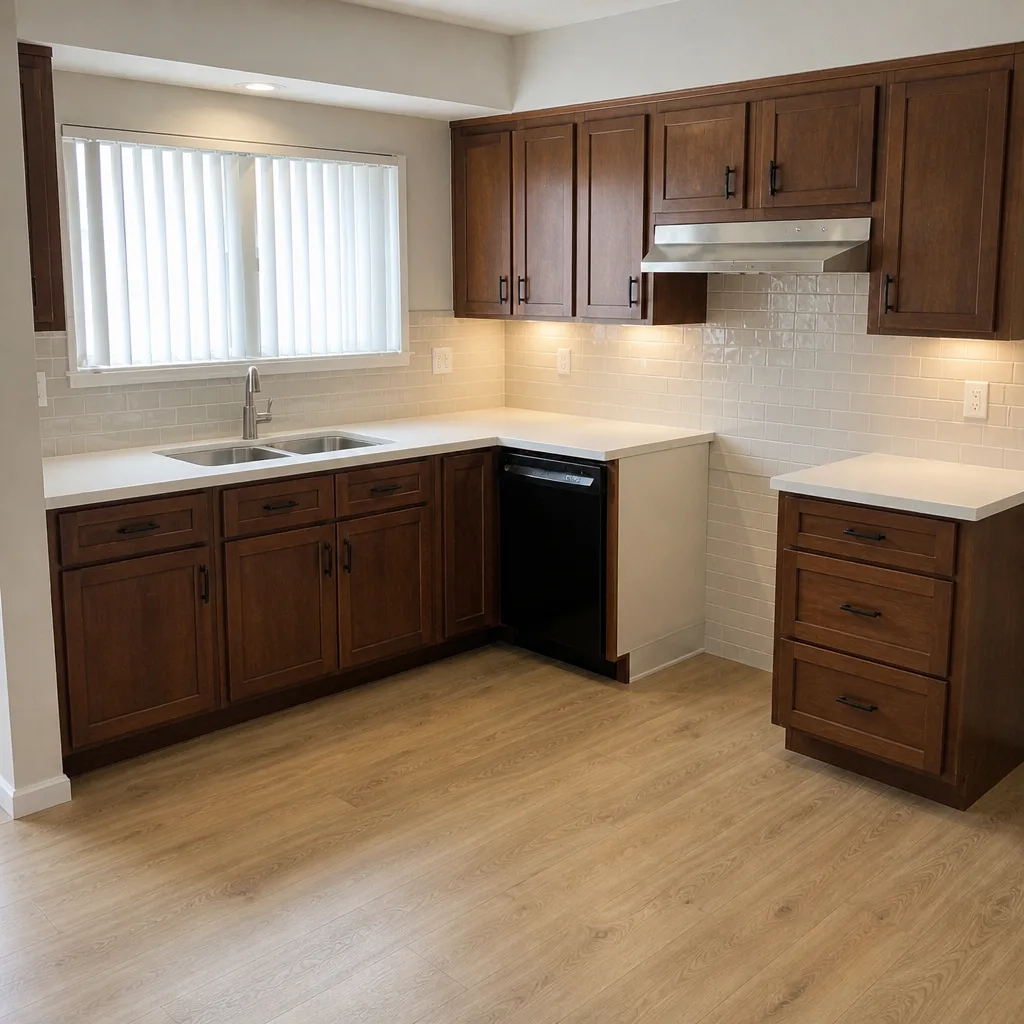 After
When to Call a Professional
Call a professional when the project touches structure, utilities, or fire code, or when the permit path crosses more than one agency. A room addition with a Tustin Legacy design review, an ADU with OCFA sprinkler requirements, an exterior envelope with window and roofing replacements that all need separate inspections: these are jobs where a single missed signature stops the whole build. We’ve watched homeowners try to manage the multi-agency sequence on an owner-builder permit and lose weeks to it. We scope the full property, pull the permits, coordinate the inspections, and keep the schedule moving from foundation to final.
Construction Tustin offers free estimates in Tustin for any project on the permit map. Call (844) 415-6046 to schedule yours. We answer 24/7, and fast dispatch runs from 7am to 7pm, Sunday through Friday.
Frequently Asked Questions
You need a permit if the remodel moves plumbing, electrical, or gas lines, changes walls, or alters the footprint. A cosmetic refresh with new cabinet fronts, countertops, and paint in the same layout is usually exempt. Call the City of Tustin building department to confirm your specific scope before demolition. For a full kitchen or home additions & ADU project with multiple trades, call (844) 415-6046 for a free estimate.
You risk a stop-work order during construction and a harder problem at resale: an unpermitted structure appears on the title report, can block a buyer’s loan, and typically forces a retroactive permit at current code. Retroactive permitting usually costs more than doing it right the first time, because it can require opening walls and bringing systems up to today’s standards. Call (844) 415-6046 for a free estimate to bring a project into compliance.
Standard residential permits typically run a few weeks from submittal to issue, and a project inside the Tustin Legacy Specific Plan takes longer because design review runs before plan check. ADUs can move faster through prefab or modular plan-certified routes. Exact timelines depend on the project and the city’s current queue, which is why we map the schedule before the first shovel goes in. Call (844) 415-6046 for a free estimate.
OCFA reviews fire-related code for the City of Tustin, so anything involving sprinklers, fire-rated walls, access, or wildland interface goes through their queue separately from the city building department. We build that review into the schedule from day one so it doesn’t stall the permit issue. Call (844) 415-6046 for a free estimate on your project.
Yes, California allows owner-builder permits for a home you live in, but it shifts supervision, inspection coordination, and liability onto you. Manufacturer warranties on some materials can be voided, and homeowner insurance may not cover owner-built construction defects. It makes sense for small, straightforward jobs, not additions or ADUs. Call (844) 415-6046 for a free estimate if you’d rather not carry that exposure.
Use the city’s online permit portal: it shows permit status, required inspection milestones, and lets you request the next inspection window. In 2024 and 2025, standard residential inspections have generally scheduled a few business days out, longer in peak months. Request your next inspection the same day the current one passes, and never cover uninspected work. Call (844) 415-6046 for a free estimate on planned work.
The Bottom Line
Tustin’s permitting structure is layered: the city building department pulls the core permit, the Orange County Fire Authority reviews fire code separately, and Tustin Legacy projects add a design review before plan check. Owner-builder permits are legal but carry warranty and insurance exposure most homeowners don’t want. Unpermitted work doesn’t go away; it shows up on the title report and can stall an escrow at the worst moment. The takeaway is simple: pull the permit, follow the inspection sequence, keep the final sign-off, and map the multi-agency path before demolition. If you’re ready to plan a project the right way, we’ll scope it with a written estimate and no surprises.
Call (844) 415-6046 for a free estimate. We answer 24/7, and fast dispatch runs from 7am to 7pm, Sunday through Friday. Estimates are free, and the written line-item quote sets the final price.
Written by the team at Construction Tustin.