Last updated November 17, 2026


Free written scope consultation - allowances, timeline, and change-order rules on paper before a single trade is scheduled
The Complete Driveway & Pavers Guide for Tustin Homeowners
Most homeowners think the pavers are the project. They are not. The base is the project, the pavers are just what you look at when it is done. In our experience across Tustin, the jobs that fail early are almost never failing because someone picked the wrong color blend. They fail because the excavation was shallow, the base was not compacted in lifts, or the drainage was pointed at the neighbor’s wall. This guide walks through what a driveway or paver project actually involves in Tustin: how the base gets built, what materials cost here, which brands hold up, how permits and HOA rules work, and what to ask before you sign anything.
Quick Answer
A driveway or paver project in Tustin typically runs from roughly $8 to $30 per square foot installed, depending on material, base conditions, and access, with a standard concrete driveway at the lower end and a full Belgard or Unilock paver system with proper base and drainage at the upper end. The single biggest factor in how long it lasts is not the paver brand, it is the depth and compaction of the base underneath it. Get a written, line-item estimate that states base depth, compaction method, drainage plan, and the exact paver line before work begins.
Styles & brands we work with
- Kitchen remodeling
- Bathroom remodeling
- Home additions & ADU
- Roofing
- Windows & doors
- Driveway & pavers
- Fence
Table of Contents
- How a Tustin driveway is actually built, layer by layer
- Why the base matters more than the paver
- Paver materials and what each one means for your project
- What driveway and paver work costs in Tustin
- Permits, HOA rules, and Tustin-specific requirements
- Drainage and why it decides how long your driveway lasts
- Maintenance: what you can do and what needs a crew
- How to choose a paver contractor in Tustin
How a Tustin driveway is actually built, layer by layer
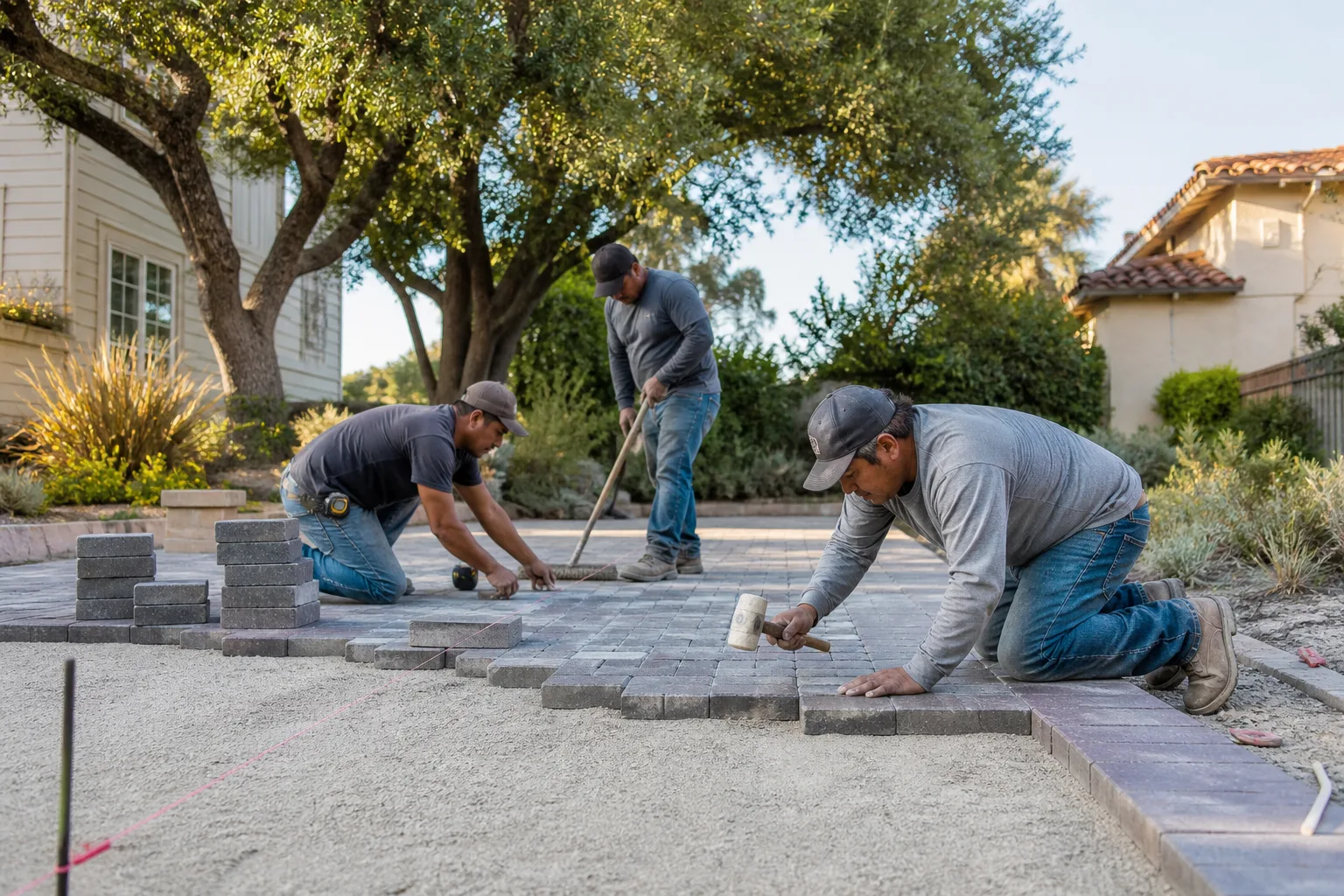
A properly built paver driveway in Tustin is five layers, not one. Every layer has a job, and skipping or thinning any of them is what causes the callbacks: rutting, shifting, settled corners, and weeds pushing through joints within a couple of seasons.
- Excavation. The existing surface is removed and the subgrade is cut down deep enough to fit every layer above it. On a driveway that has to carry a vehicle, that means digging well below the finished paver height, not just scraping off the old slab.
- Geotextile fabric. A woven or non-woven separation fabric goes down over the subgrade. Its job is to keep the native soil from pumping up into the base under load. It is cheap, invisible, and one of the first things cut on a low bid.
- Aggregate base. Crushed aggregate is placed in lifts of a few inches and compacted between each lift with a plate or roller. Compacting one thick layer instead of several thin ones is a common shortcut, and it leaves the base loose underneath.
- Bedding sand. A thin, screeded layer of coarse bedding sand sits between the base and the pavers. It levels the field and lets the pavers seat evenly. It is not the structural layer, and it should never be used to make up for a shallow base.
- Pavers and joint sand. Pavers are laid to the pattern, cut at edges and transitions, compacted into the bedding, then swept with joint sand and compacted again so the joints lock. Edge restraint is set in concrete or spiked along every open edge.
For anyone comparing a paver quote to a concrete quote, that list is the reason the numbers look different. Concrete is one pour over a compacted subgrade. A paver system is a built assembly. If you want to see how we scope a driveway from tear-out to finished surface, our driveway & pavers page lays out the phases.
Why the base matters more than the paver
We’ve seen this repeatedly: a homeowner pays for a premium paver line and is disappointed two years later when the driveway ruts. The paver did its job. The base did not. In Tustin, the ground under a driveway can be anything from decomposed granite to expansive clay, and the two behave very differently under a vehicle load.
Decomposed granite drains reasonably well and compacts predictably when it is worked in lifts with the right moisture. Expansive clay is the harder problem. It swells when it takes on water and shrinks as it dries, and over a driveway that movement translates into heaving and settlement. On a site like that, the base design has to account for it: deeper aggregate, fabric, and drainage that gets water away from the subgrade instead of letting it sit.
- Base depth. A pedestrian walkway and a driveway carrying a full-size SUV are not the same build. Ask what depth is specified for your driveway specifically, in inches, and get it in the estimate.
- Compaction. Ask how the base is compacted and in how many lifts. Plate compactors and rollers are both fine; what matters is that it is done layer by layer.
- Subgrade prep. Proof-rolling or otherwise checking the exposed subgrade before base goes down catches soft spots while they are still cheap to fix.
- Edge restraint. Pavers spread outward without a restrained edge. Concrete curb or spiked edge restraint along the open sides is not optional.
None of this is visible when the job is finished, which is exactly why it gets cut. A written estimate that names base depth and compaction method is the single best protection you have.
Paver materials and what each one means for your project
Paver selection is where most homeowners spend their time, and it is worth spending it. But material choice is a durability and maintenance decision, not just a color decision. Each type behaves differently under Tustin’s dry summers and winter rains.
Concrete pavers
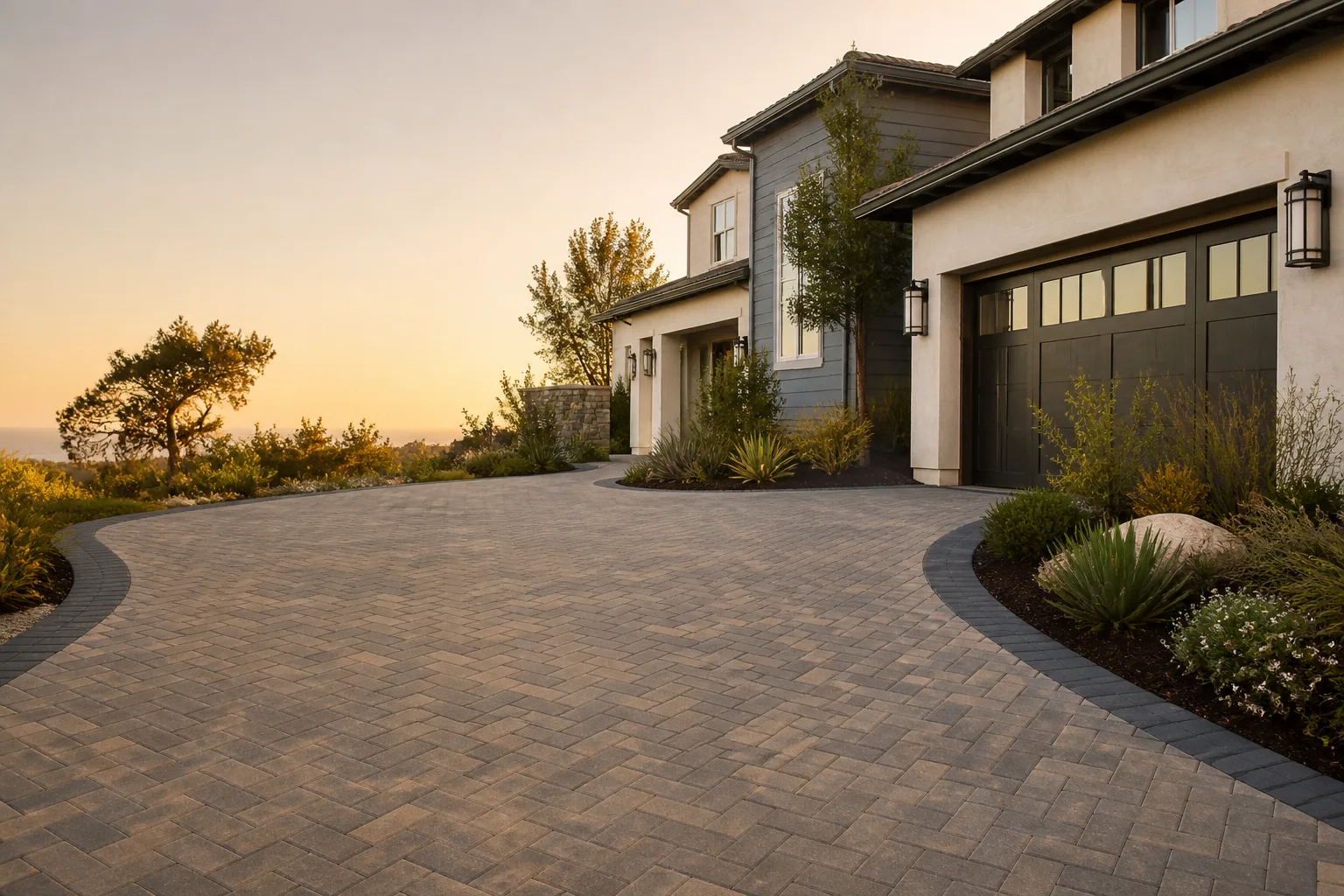
The standard choice for driveways, and for good reason. Concrete pavers are dense, dimensionally consistent, and available in interlocking shapes that spread load well. Belgard, Unilock, Techo-Bloc, Cambridge Pavers, and Tremron all make driveway-grade lines. Concrete pavers resist fading better than many people expect and are simple to lift and reset if a single unit ever needs attention.
Clay brick pavers
Clay brick brings a classic look and holds color essentially permanently, since the color runs through the body of the brick rather than sitting on the surface. The trade-off is cost and a firmer, more formal surface character. On a Tustin driveway, clay brick is a strong choice if the color and texture are what you’re after and the budget supports it.
Permeable pavers
Permeable systems are designed to let water pass through the joints and into a designed storage layer below, instead of running off the surface. They are a real solution on a lot where runoff is a problem and where you want to reduce what leaves the property. They also demand a more carefully built base than a standard system, so the installer’s experience matters more, not less.
Natural stone
Flagstone and travertine set on a properly built base give a distinctive look for walkways, patios, and entries. For a driveway carrying vehicles, natural stone needs a very solid base and careful thickness selection. It is the most demanding option and should be scoped by someone who has installed it, not improvised.
We work with Belgard and Unilock lines so you get a manufacturer-backed product with a real warranty behind it, not a substitution at the last minute. If a quote names a specific line, ask whether that exact line is what gets delivered.
What driveway and paver work costs in Tustin
Pricing on driveways and pavers in Tustin depends on square footage, existing surface removal, base conditions, material choice, and access to the work area. The ranges below are typical estimates for planning purposes, not a quote. The written estimate sets the final price, and any reputable contractor will be explicit that the number can move if demolition uncovers something the estimate didn’t anticipate.
| Scope | Typical estimated range |
|---|---|
| Concrete driveway replacement (standard broom finish) | Lower end of the $8 – $30/sq ft band |
| Concrete paver driveway, Belgard or Unilock line, full base build | Mid to upper end of the band |
| Clay brick or premium paver driveway | Upper end of the band |
| Permeable paver system with designed storage base | Upper end of the band, plus base engineering |
| Paver walkway or patio (pedestrian load) | Lower than driveway pricing for the same material |
| Demolition and haul-off of existing surface | Line item, varies with thickness and access |
| Drainage work (channel drain, catch basin, regrading) | Line item, scoped to the site |
- Square footage is the biggest driver. A two-car driveway is a much larger ticket than an entry walk.
- Base depth required by site conditions changes the material and labor line significantly on problem soils.
- Access matters. A driveway reachable by a skid steer and a dumpster is cheaper to build than one where everything has to be moved by wheelbarrow.
- Material line is the most controllable variable. A standard concrete paver and a premium clay brick at the same square footage are very different budgets.
We give line-item written estimates so you can see demolition, base, material, and drainage as separate numbers. Call (844) 415-6046 to schedule a free estimate. We answer 24/7. Fast dispatch from 7am to 7pm, Sunday through Friday.
Permits, HOA rules, and Tustin-specific requirements
Most driveway replacement and paver work in Tustin needs a permit, and the specifics depend on the scope. A straight like-for-like replacement is a different review than widening a driveway, changing the curb cut, or altering how stormwater leaves the property. The city’s building department is the authority on what your project requires, and it is worth calling them before you commit to a contractor.
- Like-for-like replacement is usually the simplest approval, but confirm whether a permit is required for the specific scope before scheduling demolition.
- Widening or changing the curb cut touches the right-of-way and typically brings in more review. This is a Tustin-specific question for the building department, not a general rule.
- Drainage alterations that change where water leaves your property often get scrutinized, because a change that pushes runoff onto a neighbor’s lot is a real problem.
- HOA rules can be stricter than the city. Many Tustin neighborhoods have design guidelines on driveway material, color, and pattern, and approval typically has to come before work starts. Read the CC&Rs before you pick a color.
Ask any contractor bidding the job a direct question: will you pull the permit and handle the inspection? A contractor who wants you to pull the permit yourself is telling you something about how the job will go. We pull permits and manage inspections as part of the scope.
Drainage and why it decides how long your driveway lasts
Water is the slow killer of a paver driveway. Tustin’s climate is dry most of the year, then delivers concentrated rain in the winter months, and a driveway graded so water pools or runs toward the house will fail long before the pavers wear out. Good drainage is designed before excavation, not added later.
Slope is the first tool. A driveway needs a consistent pitch away from the structure and toward a safe discharge point, whether that is the street, a landscaped area, or a designed drain. Where the grade doesn’t cooperate, channel drains and catch basins handle the water instead. On a lot with a low corner or a shared property line, the drainage plan has to account for where that water ends up, not just where it leaves the driveway.
- Confirm the discharge point. Ask where the water goes at the bottom of the driveway and verify it isn’t aimed at the neighbor’s wall or your own foundation.
- Check the transition to the garage. The apron at the garage door is where water intrusion shows up first. A slight pitch and a proper threshold detail keep it out.
- Consider permeable construction if runoff volume is the constraint and the base can be built for it.
- Inspect after the first big rain. A driveway that pools in one spot after a winter storm is telling you the grade needs adjustment, and it is much cheaper to fix early.
From the driveway to the roofline, we scope the full property, and that includes making sure the surface water from a new driveway doesn’t create a problem for the rest of the house. A paver project and a fence installation that share a property line, for example, need to be planned together so the fence footings and the paver edge restraint don’t fight each other.
Maintenance: what you can do and what needs a crew
Some paver upkeep is genuinely a homeowner job, done on a Sunday or a free afternoon: sweeping, pulling the occasional weed, topping off joint sand, scrubbing a stain. Other work needs a crew and the right equipment, and trying to handle it yourself usually makes it worse.
What you can handle
- Sweeping. Keep the surface clear of grit and leaves so debris doesn’t wash into joints.
- Weed pulling. Catch weeds early, before roots work into the joint sand.
- Joint sand top-offs. Joint sand settles over time. Keeping joints filled is the best thing you can do to keep pavers locked and stable.
- Stain cleanup. Most surface stains on concrete pavers come up with the right cleaner and a scrub brush. Test in a hidden spot first.
What needs a professional
- Re-leveling settled sections. A settled area means the base underneath has moved. Resetting the surface without fixing the base will fail again.
- Edge restraint repair. Loose or broken restraint lets pavers spread, and the fix involves resetting the curb or spikes properly.
- Drainage corrections. Regrading a driveway is not a homeowner task, and a bad grade change is worse than the original problem.
- Efflorescence that won’t clear. White haze on new pavers is common and usually clears, but persistent efflorescence can point to moisture issues worth diagnosing.
If you’re also planning exterior work, this is the moment to look at the whole property. A driveway, a fence line, and an home additions & ADU project all share the same site constraints, and scoping them together avoids tearing up finished work later.
How to choose a paver contractor in Tustin
Good contractors are not hard to spot if you know what to ask. The questions below separate a crew that builds a proper base from one that lays pavers over scraped ground and hopes for the best.
- Ask for a line-item written estimate. Demolition, base, material, drainage, and permit should each be visible. A single lump-sum number hides what is being cut.
- Ask for base depth in inches and compaction method. A contractor who can answer this specifically has done the work. One who deflects has not.
- Ask about the permit. Confirm who is pulling it and who handles the inspection.
- Ask which exact paver line will be delivered. Get the manufacturer and line name in the estimate, not just “paver.”
- Ask about the workmanship warranty in writing. A manufacturer warranty covers the product, not the installation.
- Ask what happens if demolition uncovers a problem. Any honest contractor will tell you the estimate can move if the site hides something. What matters is the process for approving the change in writing before work continues.
- Ask about fixed pricing. Fixed pricing with no surprise change orders, agreed in writing before work starts, is what you’re after.
We work with Belgard and Unilock so you get a manufacturer-backed product with a real warranty, not a substitution. And because we handle seven service categories under one contractor relationship, a driveway project doesn’t have to be coordinated with three other trades. One contractor. Every phase. No handoff gaps.
Common Mistakes to Avoid
- Choosing the paver before the base. The paver is the visible decision, but the base depth and compaction are what determine how the driveway performs. Settle the base spec first, then pick the color.
- Skipping the permit. Tustin requires permits for much of this work, and an unpermitted driveway can create a problem at sale. Confirm the scope with the building department before demolition.
- Ignoring the HOA. Many Tustin neighborhoods have design rules on driveway material and color. Getting approval before work starts saves a tear-out later.
- Pricing on square footage alone. Two quotes at the same square footage can hide very different base builds. Compare line items, not the bottom number.
- Letting water run toward the house. Drainage is the most common cause of early driveway failure. Check the discharge point before you sign off on the grade.
- Using bedding sand to make up for a shallow base. Bedding sand is a leveling layer, not a structural one. If the estimate shows a thin base made up with sand, ask why.
- Choosing the cheapest material and the largest pour. A larger driveway in a lower-grade material often costs more to maintain than a smaller driveway in a proper paver system with a solid base.
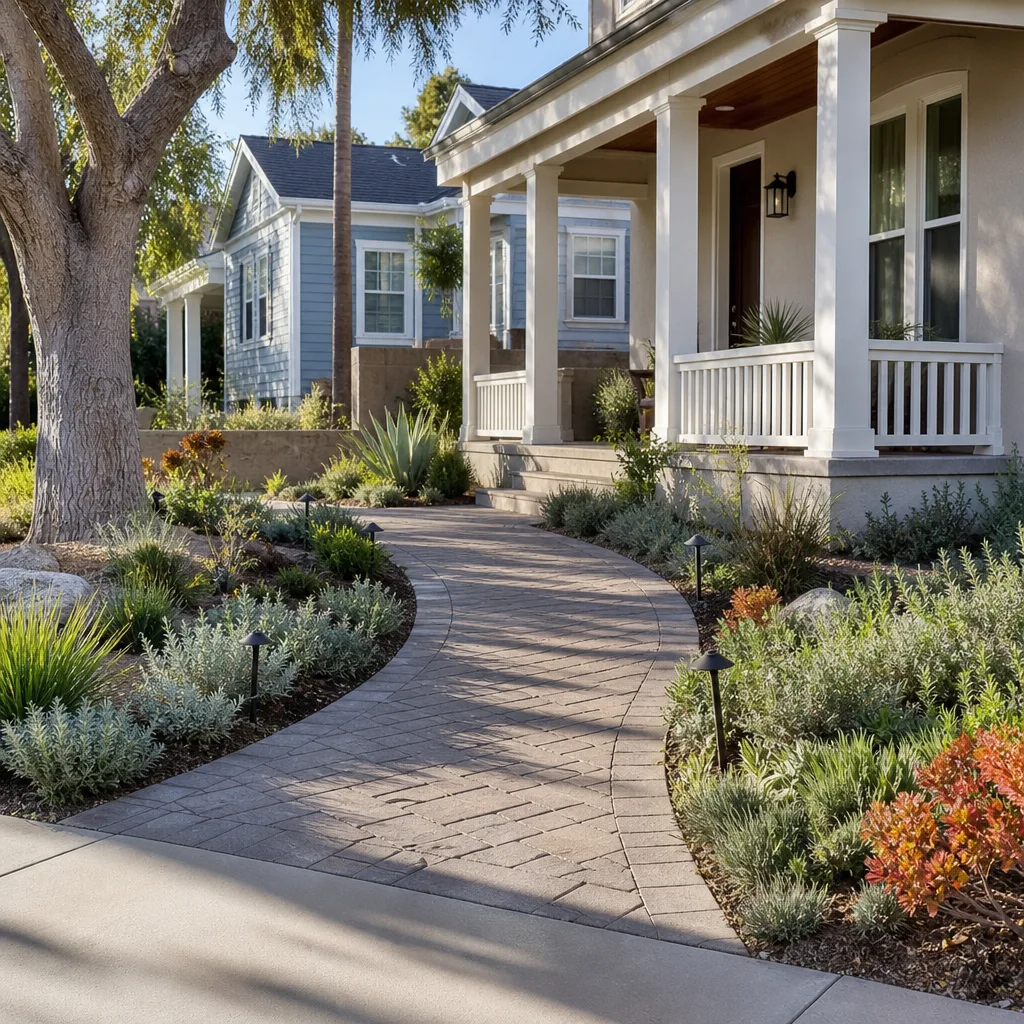
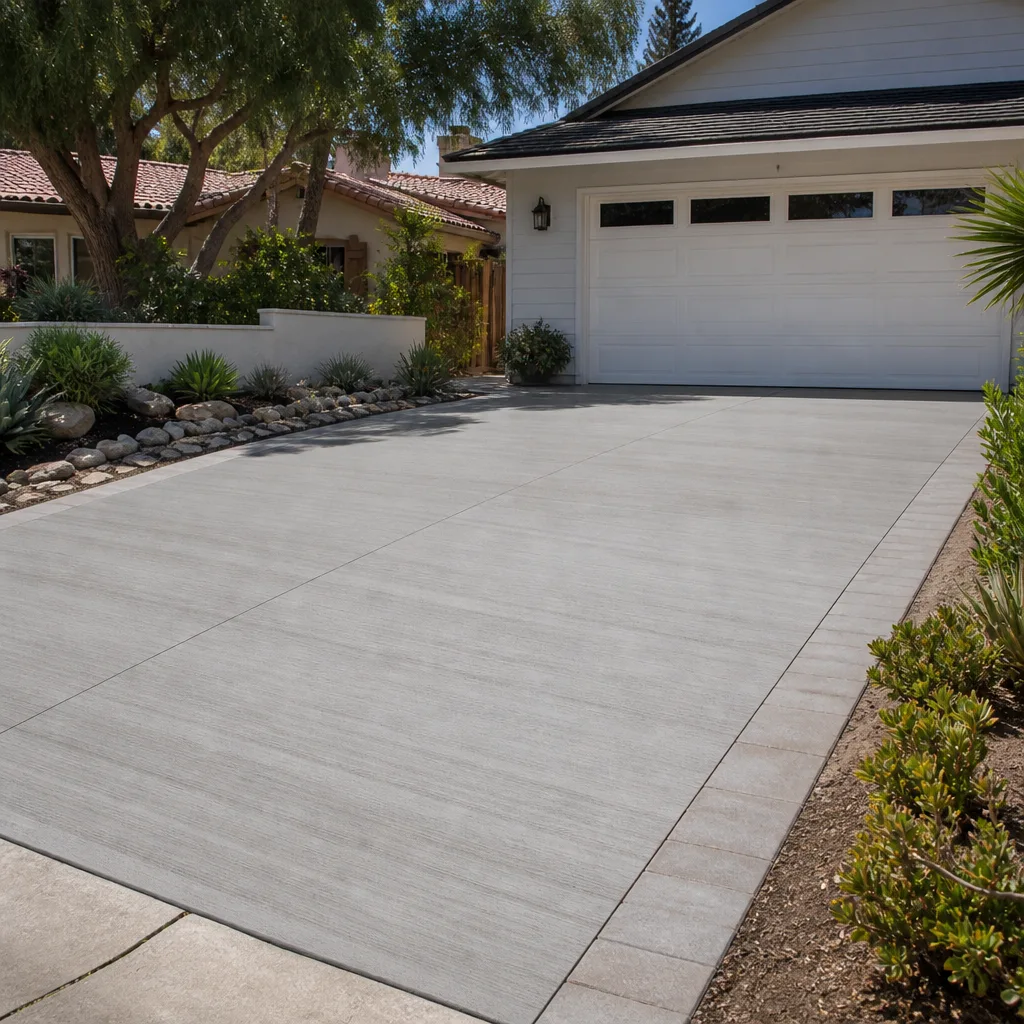
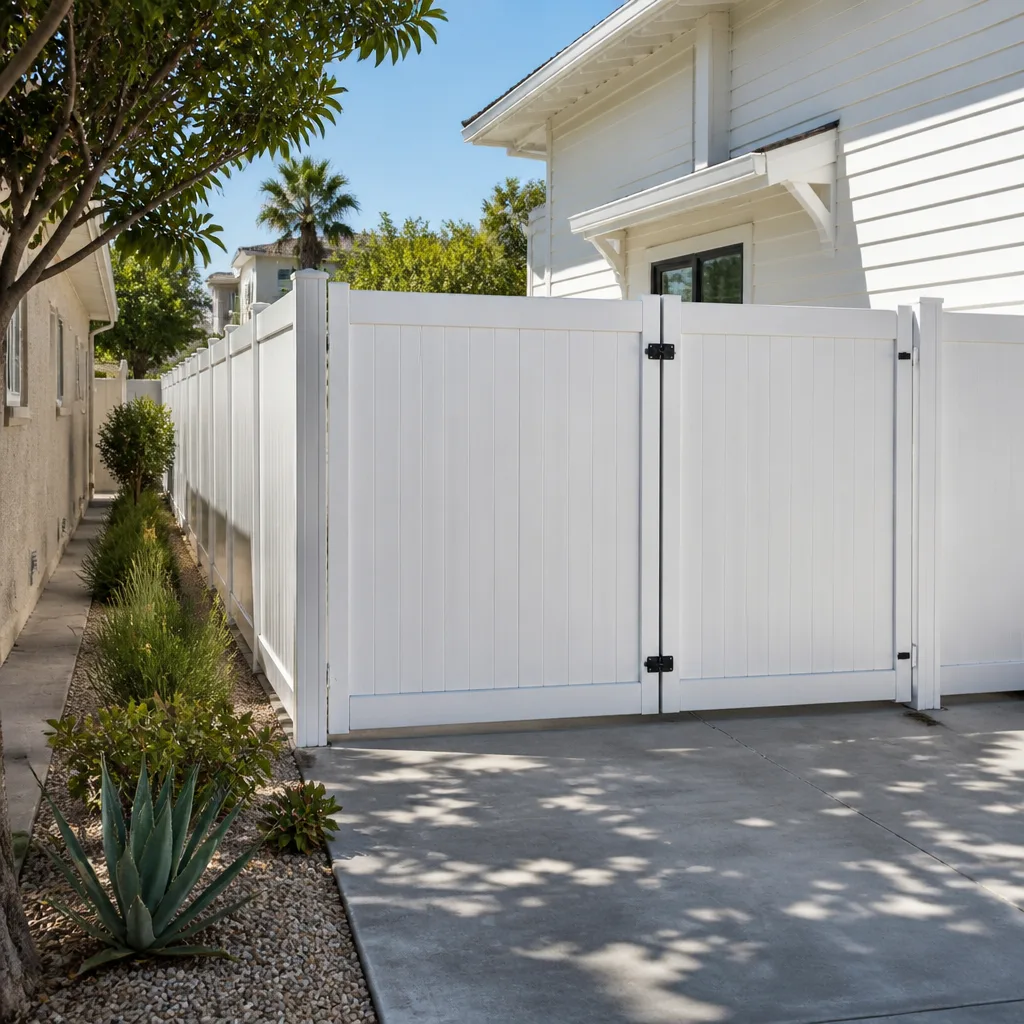
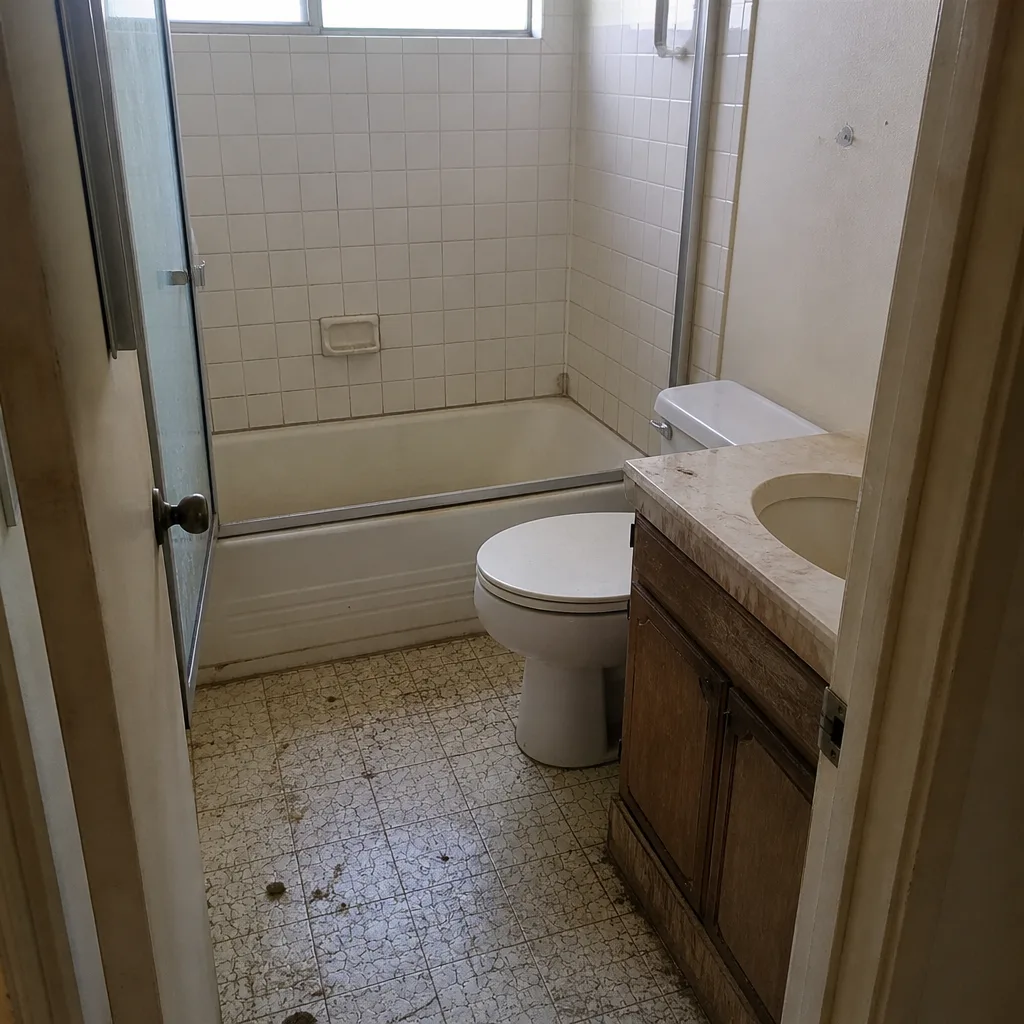
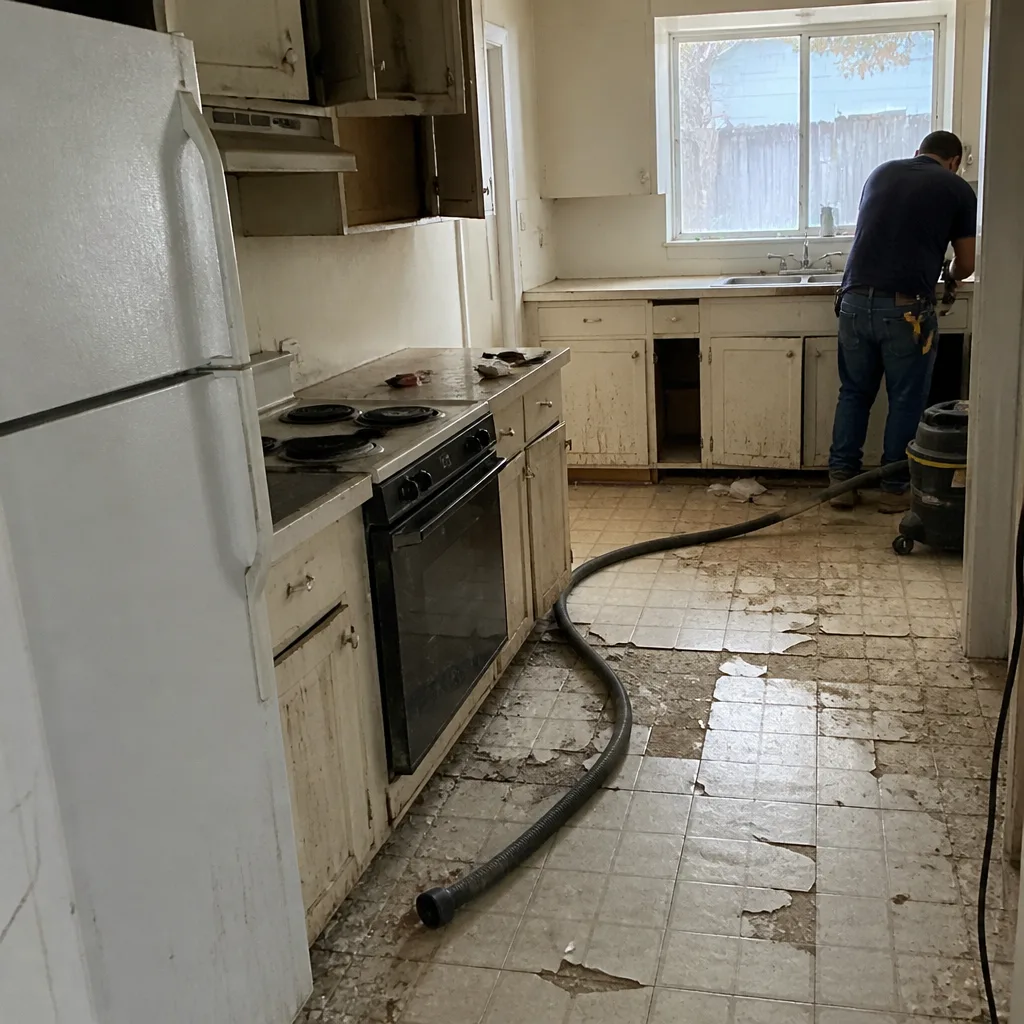
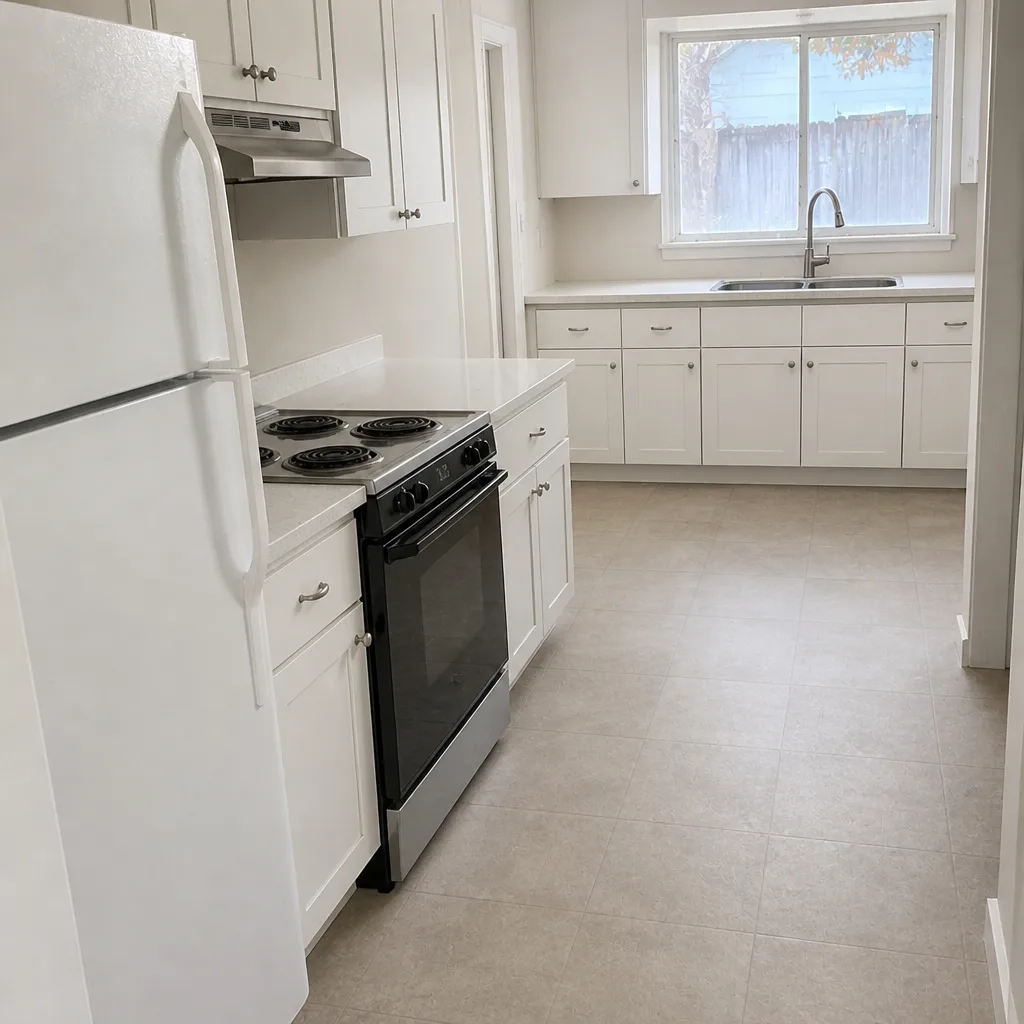
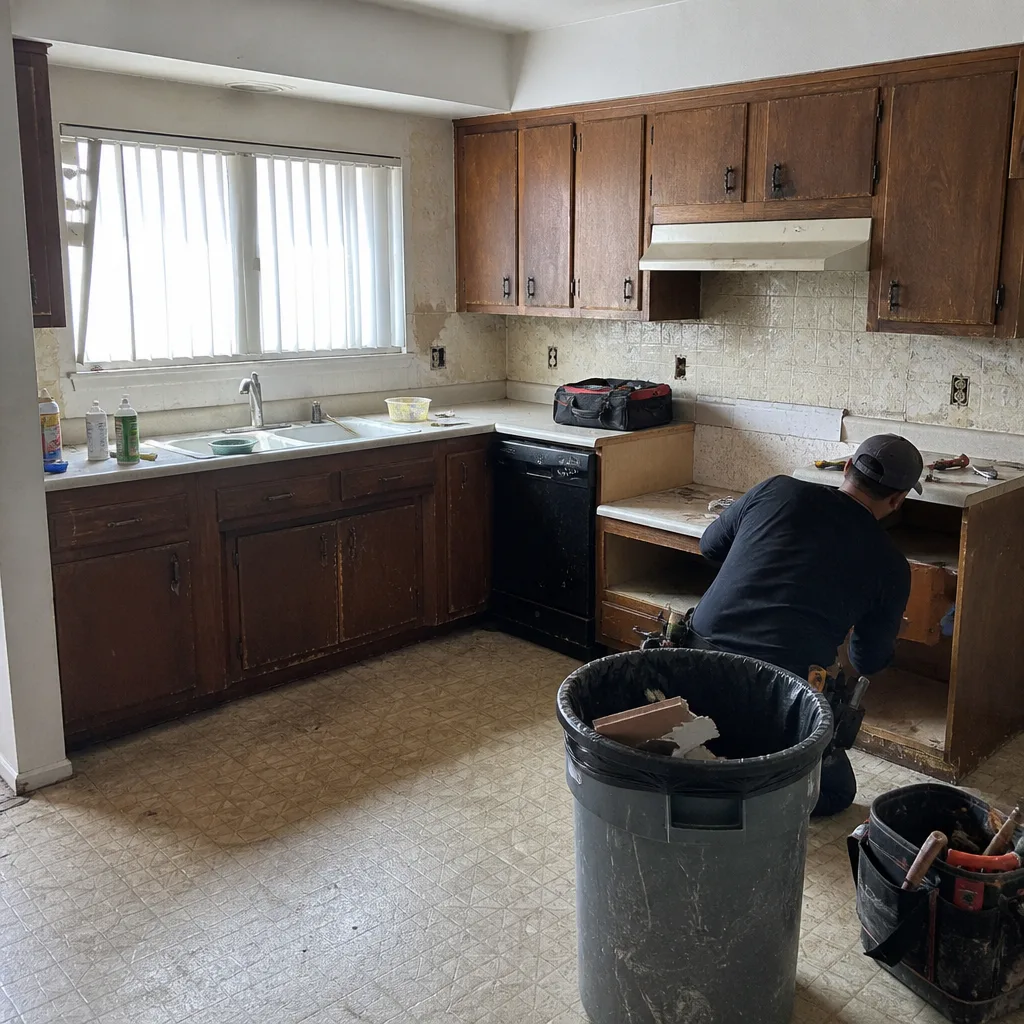
See the difference
 Before
 After
 Before
 After
 Before
 After
When to Call a Professional
Some driveway problems are cosmetic; others are structural and getting worse. Call a professional when you see rutting or dips that return after a repair, when pavers are spreading at the open edges, when water pools against the house or the garage door after a winter rain, or when the base under an existing surface has clearly moved. A settled section can usually be lifted and reset, but only after the underlying cause is fixed. If you’re changing the driveway footprint, widening it, or altering drainage, the permit and design questions alone justify a professional assessment. Construction Tustin offers free estimates in Tustin. Call (844) 415-6046. We answer 24/7. Fast dispatch from 7am to 7pm, Sunday through Friday.
Frequently Asked Questions
A paver driveway in Tustin typically falls within roughly $8 to $30 per square foot installed, depending on material, base depth, and access. Standard concrete paver systems land mid-range, while clay brick or permeable systems push toward the upper end because of material cost and base requirements. Call (844) 415-6046 for an exact quote. Estimates are free.
In theory, yes, but the base is where most DIY drives fail. Getting the excavation depth, base compaction in lifts, bedding sand, edge restraint, and drainage all right takes equipment and experience most homeowners don’t have on hand. Most people who start a paver driveway alone end up hiring a crew to fix the base.
Most driveway replacement and paver work in Tustin requires a permit, and the specifics depend on the scope. A like-for-like replacement is simpler than widening a driveway or changing the curb cut, but confirm the requirements with Tustin’s building department before demolition. We pull permits and handle inspections as part of the scope.
No. We are closed Saturday. We are open Sunday through Friday, 7am to 7pm. Call (844) 415-6046. We answer 24/7, and a call outside dispatch hours is booked into the next opening, Sunday through Friday, 7am to 7pm.
A typical residential driveway takes several days, depending on square footage, base depth, demolition, and drying time between pours for edge restraint. A small walkway can be completed faster; a large driveway with significant demolition or drainage work takes longer. The written estimate should state the expected timeline for your specific project.
Individual pavers can be lifted and reset, and settled sections can be corrected, as long as the underlying base is fixed first. A single cracked paver or a small area of shifted units is a repair, not a replacement. If the failure is widespread or the base is compromised across the drive, replacement of a section may make more sense than repeated patches.
The Bottom Line
The difference between a driveway that lasts and one that fails early is almost never the paver color or brand. It is whether the base was dug deep enough, compacted in proper lifts, drained correctly, and restrained at the edges. Get a written, line-item estimate that names base depth, compaction method, paver line, and drainage plan. Confirm the permit and HOA approval before demolition. Then choose the material that fits your budget and your taste, not the one that makes the bottom-line number look smallest. From the driveway to the roofline, Construction Tustin scopes the full property so the work on one part of the site doesn’t undermine another.
Call (844) 415-6046 for a free estimate on your driveway or paver project in Tustin. We answer 24/7. Fast dispatch from 7am to 7pm, Sunday through Friday, and we’re closed Saturday.
Written by the team at Construction Tustin.